
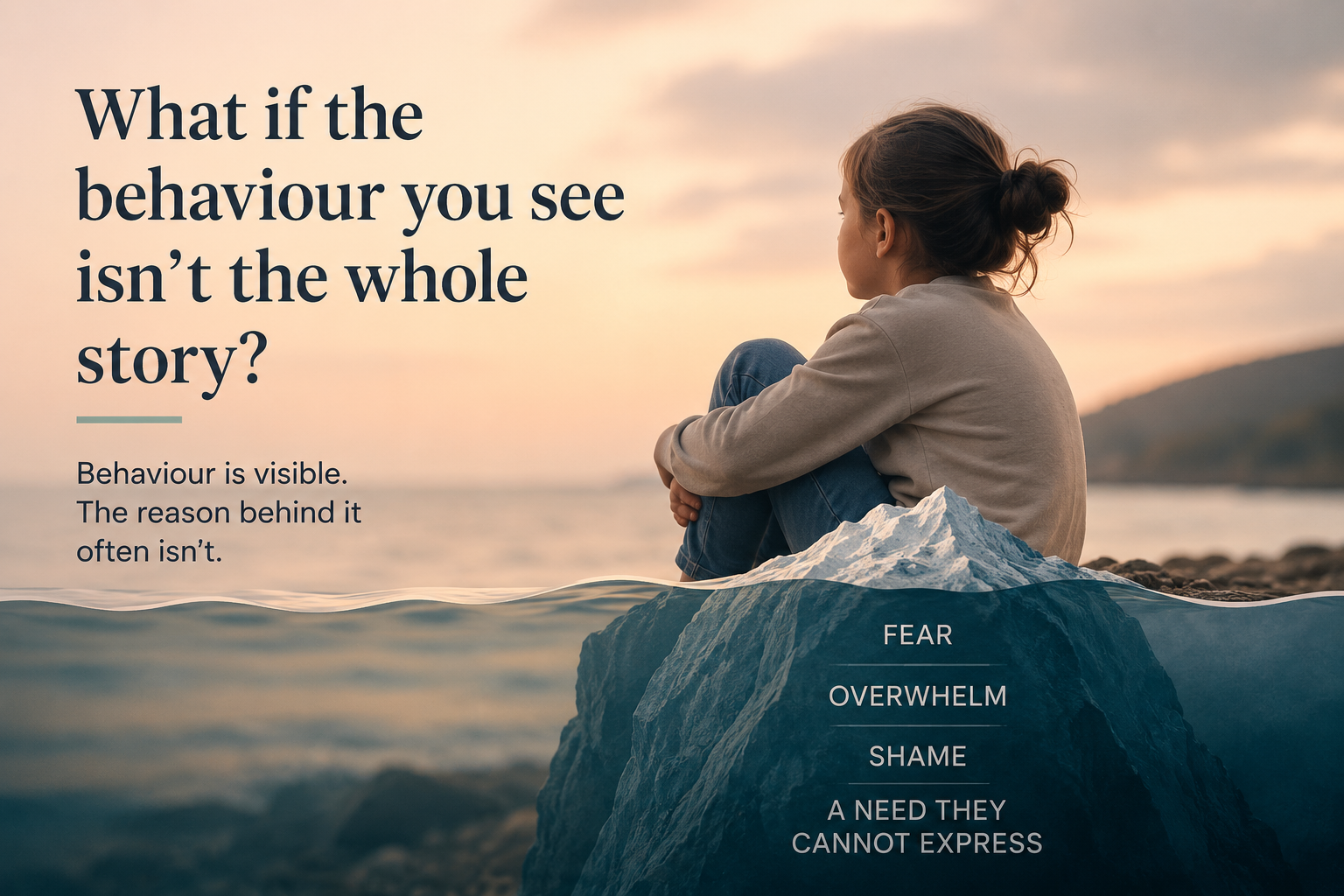
What If the Behaviour You See Isn't the Whole Story?
We see behaviour every day.
The child who refuses to join in.
The teenager who suddenly becomes withdrawn.
The colleague who snaps over something small.
The parent who seems impatient.
Behaviour is visible. It's immediate. It's often the first thing we notice.
What we don't see as easily is everything that may be happening beneath it.
When we only respond to the behaviour itself, we can miss the story behind it. That doesn't mean every behaviour has the same explanation or that harmful behaviour should be excused. It means that behaviour exists within a context, and understanding that context can change how we respond.
A child who appears "defiant" may be feeling overwhelmed.
A teenager who isolates themselves may be carrying worries they don't know how to express.
An adult who reacts with frustration may be exhausted, frightened, or feeling unheard.
Of course, we can't know what's happening beneath the surface simply by observing someone's behaviour. Assumptions can be just as unhelpful as quick judgments.
Instead of jumping to conclusions, we can become curious.
Rather than asking:
"What's wrong with them?"
We might ask:
"What might this behaviour be communicating?"
Curiosity creates space for understanding. It slows us down enough to notice patterns, ask better questions, and respond with greater thoughtfulness rather than reacting automatically.
Whether you're a parent, teacher, professional, or simply trying to understand yourself or someone you care about, changing the question can change the conversation.
Behaviour is often the beginning of the story—not the whole story.
Perhaps what lies beneath the surface is where understanding really begins