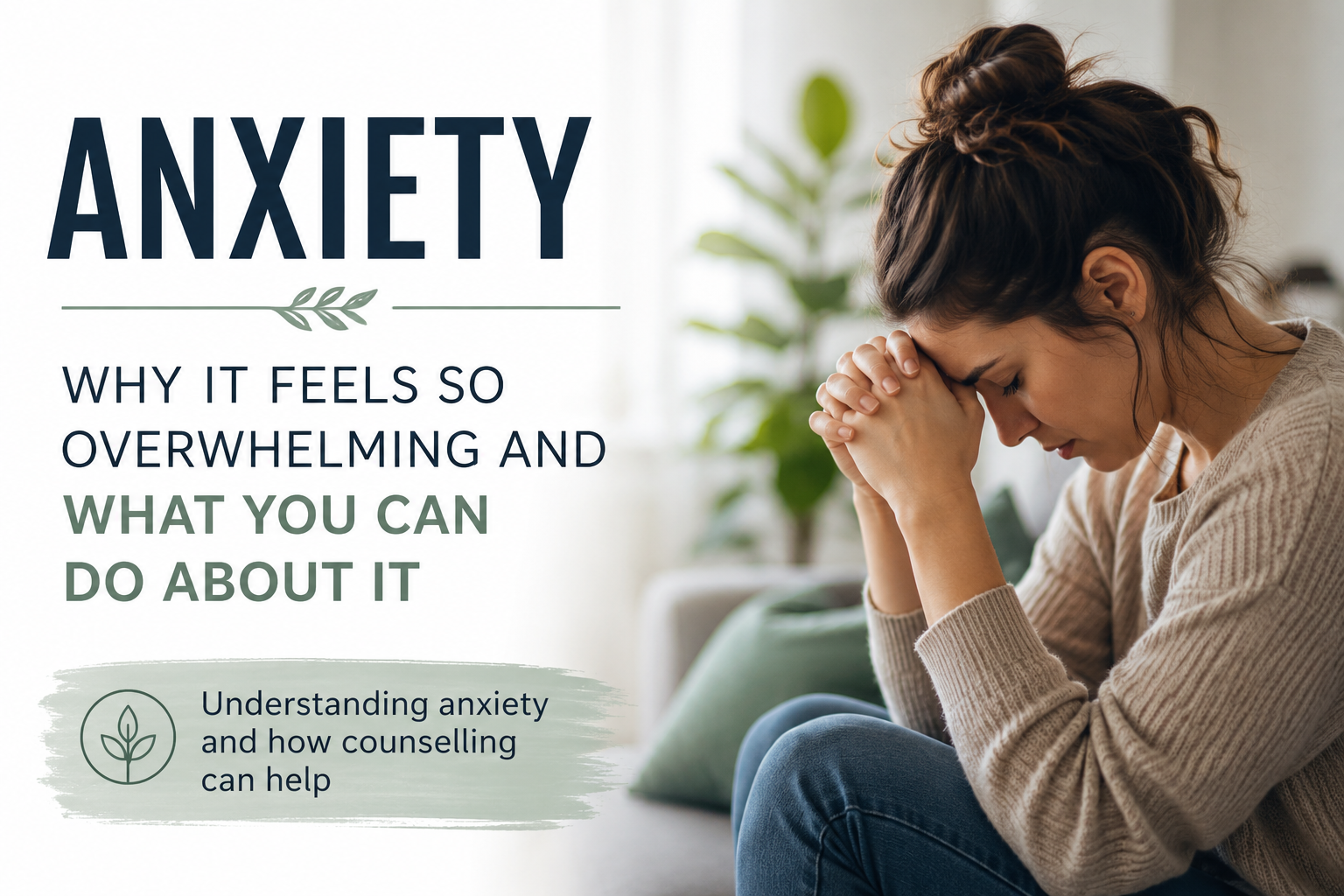
Understanding Anxiety: When Worry Starts Taking Over
Everyone experiences anxiety from time to time. It is a natural response to stress, uncertainty, or situations that feel threatening. However, for some people, anxiety becomes persistent, overwhelming, and begins to interfere with daily life.
What Is Anxiety?
Anxiety is more than simply feeling worried before an exam or nervous about a job interview. It can involve excessive and ongoing worry about everyday situations, even when there is little or no apparent reason for concern.
Common symptoms of anxiety include:
- Constant worrying or overthinking
- Feeling restless or on edge
- Difficulty concentrating
- Muscle tension
- Trouble sleeping
- Fatigue
- Irritability
- Racing thoughts
Some people also experience physical symptoms such as a rapid heartbeat, sweating, dizziness, shortness of breath, or stomach discomfort.
Why Does Anxiety Develop?
Anxiety can develop for many reasons. Stressful life events, work pressures, relationship difficulties, health concerns, financial worries, or past experiences can all contribute. In some cases, people cannot identify a single cause and simply feel anxious most of the time.
When Should You Seek Help?
It may be helpful to seek professional support if anxiety:
- Persists for several weeks or months
- Affects work, relationships, or daily activities
- Causes frequent panic attacks
- Leads to avoidance of situations or places
- Impacts sleep and overall wellbeing
Seeking help is not a sign of weakness. In fact, recognising that support may be beneficial is often the first step toward positive change.
How Counselling Can Help
Counselling provides a safe and confidential space to explore thoughts, feelings, and behaviours that may be contributing to anxiety. Together, you and your counsellor can identify patterns, develop coping strategies, and build confidence in managing anxiety more effectively.
Many people find that counselling helps them:
- Understand the root causes of their anxiety
- Reduce excessive worrying
- Improve self-confidence
- Develop healthier coping mechanisms
- Feel more in control of their lives
A Final Thought
Anxiety can feel isolating, but you do not have to face it alone. With the right support, it is possible to reduce anxiety, regain confidence, and enjoy a more balanced and fulfilling life.
If anxiety is affecting your daily life, consider reaching out to a qualified counsellor for support.